Welcome to the official website for the “Workshop on Computational User Models for Work”. This workshop will be held at CHIWORK 2026 in Linz, Austria. Please note that the workshop will be conducted in-person only and is limited to 25 participants.
Update: To encourage broader participation, we have changed from a submission-based to an open-door format, meaning everyone is welcome to attend. If we reach capacity, priority will be given to those who submitted a proposal.
About
Computational models of human behavior have shown promise in informing design of interactive systems that align with users’ needs. Computational user models have potential to better anticipate and adapt systems to user needs and preferences, and are explicit about their assumptions regarding human behavior. This workshop will focus on how such models are relevant for work contexts. In order to develop a shared understanding of such models and their applications, and to build a community around these topics, the workshop will feature a tutorial on user models, breakout discussions, taxonomy building and paper writing activities.
Workshop Goals
The primary objective of this workshop is to establish a comprehensive understanding of computational user models in the context of work. To achieve this, the workshop focuses on several key areas:
-
Establish Common Ground: The workshop will provide an introductory tutorial on computational models to ensure all participants share a foundational understanding.
-
Develop a Taxonomy: The main focus is the joint development of a taxonomy to classify computational models for work. Participants will refine two initial dimensions during the workshop:
-
Model-Specific Dimension: Categorizing technical and structural approaches, including model types, required inputs, and the modeled target variables.
-
Domain-Specific Dimension: Contextualizing models by the actual task and data collection methods, such as the kind of work, behavioral aspects, modalities, scenarios, and intended application areas.
-
-
Community and Future Outlook: Extend the taxonomy to better account for the needs and characteristics of the CHIWORK community.
-
Establish a shared library of starting papers to facilitate snowball sampling for a literature review.
-
Create a clear plan so the taxonomy and review can be submitted by the organizers and interested participants as a full paper at CHIWORK 27
Call for Participation
Calling for Participation to the Workshop on Computational User Models for Work, held at CHIWORK 2026. Workplaces increasingly adopt AI systems, but current approaches tend to rely on generic implicit assumptions on user behavior, and offer only limited support for dynamic adaptation to diverse workers, teams, and organizational contexts. There is an opportunity and need to investigate computational user models that are explicit about their assumptions and that are able to simulate and predict human behavior, both for testing and adaptation of interfaces and systems. However, the field currently lacks shared frameworks and critical discussion. We invite researchers and practitioners who already, or intend to, apply models of human behavior for their research artifacts or products for work contexts. We welcome submissions from various fields, including but not limited to HCI, HRI, Machine Learning, and Cognitive Science in the context of work.
To participate, please submit a one-page position statement summarizing relevant previous work and motivation for taking part in the workshop using the following form. The submission deadline is May 31st AoE. Authors of accepted position statements must attend the workshop in-person and register for the workshop. At the workshop, facilitators will provide participants with a brief tutorial on computational user models for HCI. The workshop will feature taxonomy development and on-the-spot paper writing activities. Participants will be invited to contribute to a prospective joint paper on a taxonomy of computational user models for work.
Schedule and Location
The workshop will take place on site. Due to capacity limits the maximal number of participants is limited to 25. See full CHIWORK workshop program here.
Organizers
Martin Lorenz

Martin Lorenz is a PhD student at the Computational Interaction Group at the Center for Scalable Data Analytics and Artificial Intelligence, Leipzig, Germany. His work focuses on developing computational models of human attention allocation in dynamic environments.
Philipp Wintersberger

Philipp Wintersberger is a Full Professor of Intelligent User Interfaces at the Interdisciplinary Transformation University in Linz, Austria. His research addresses human-machine cooperation in safety-critical AI-driven systems.
Helena Anna Frijns
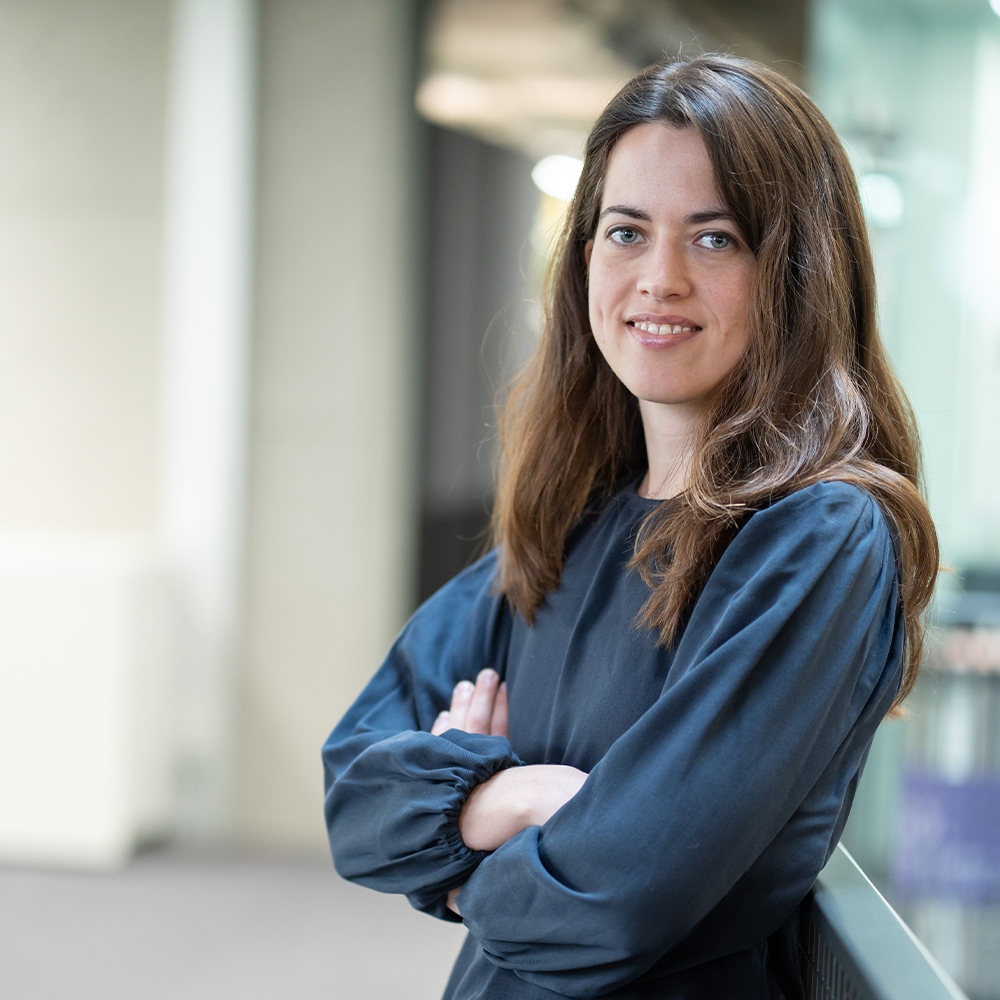
Helena Anna Frijns is a Postdoc at the Intelligent User Interfaces Group at Interdisciplinary Transformation University Austria. Her work focuses on understanding, modeling, and shaping interactions between people and robots.
Leopold Böss

Leopold Böss is a PhD student at the Intelligent User Interfaces Group at the Interdisciplinary Transformation University, Austria. His work focuses on the computational modeling of human-like eye-head coordination, specifically in tasks that require high-amplitude gaze shifts and, thus, eye-head coordination.
Alexander Lingler

Alexander Lingler is a PhD student at the Intelligent User Interfaces Group at Interdisciplinary Transformation University Austria, where he researches domain- and task-independent attention management systems by modeling human behavior to enhance adaptive user interaction and multitasking efficiency.
Patrick Ebel

Patrick Ebel is Assistant Professor for Computational Interaction at Hasso Plattner Institute. His research focuses on data-driven and RL-based simulated users that model human cognition, perception and motor control. These models aim to support the design and evaluation of interactive systems that are better aligned with human goals, abilities, and behavior.
Inclusion and Accessibility
Please contact Martin Lorenz for further information.